12 November 2023
These are notes that I made as I did the course in Learning How To Learn, a course hosted on coursera and given by Barbara Oakley and Dr. Terrence Sejnowski. Link
Focused and diffuse mode
The focused mode is a mode of attention where we intentionally direct all our working memory and cognitive power on a single problem.
Diffuse mode is when we relax our attention and let our mind move easily between different ideas. This can include drifting to other topics. Great examples include being in the shower, in the bath, or exercising.
These two modes can be thought of in the way a pinball moves around a machine. When the pins on the machine are very close together it stays in a small area. When the pins are farther apart the ball can bounce all over the machine. This allows novel connections to be made.
Both modes are important for learning, and we need to be able to swap between them to solve problems and generate new ideas by combining ideas together.
Dreams can be an amazing place for distant neural connections to spark. But for dreams to help with problem solving you need to have wrestled with the problem consciously and have the information in your mind during the day.
Some famous inventors and artists have used techniques where they approached the very brink of sleep, only to rouse themselves at the last moment and go to write down any interesting ideas they may have had. This is an example of a particularly deep kind of diffuse mode thinking.
The pomodoro technique is a great way to engage bouts of focused mode thinking. For maximum benefit, remove distractions such as phones, noisy people, or alerts from your computer.
Your neural connections get stronger with repeated use. "Neurons that fire together, wire together" as the saying goes.
To build strong neural connections you need to practice them each day over a long period. This can be days or even weeks. You can't build a sturdy structure in a day.
Sleep is critical in consolidating memories. Research on neuron firings during sleep have demonstrated that important events are in a way repeated in the brain as you sleep, with the same clusters of neurons firing repeatedly to create strong pathways between eachother.
Intro to memory
Analogy is a useful tool for learning as it makes things more memorable.
Long term memory can be compared to a storehouse where you can store an incredible amount of data but where that data is difficult or slow to access. Often we don't actually forget information, but simply lose the ability to access it. Often these connections are made unconsciously during diffused mode thinking, which is why wonderful ideas can arise while doing completely banal activites.
Working memory acts as a blackboard where things are easy to access but can quickly be erased. We can generally only hold about 4 to 6 things in our working memory. This seems to expand in the minds of experts, but that is largely because they will have chunked the information.
You can think of chunked information as being more compact and thus able to fit more into a single slot of working memory.
Good learning environments and attitudes
There is no such thing as multi-tasking but you can get quite good at context switching. Though in general context-switching is going to hurt your productivity.
The moment when you're about to context switch can often be a big moment for procrastination. In those times you have to be especially vigilant.
A rich environment of people and activities helps to improve neuron generation in the brain. Exercise also helps with this, especially vigorous exercise.
Being in a creative environment helps to make you more creative.
Don't get hung up on test questions that you can't answer when doing examinations. Skip to the ones you can easily handle first.
Success isn't about being smart. It's largely about passion and persistence.
Language learning tips
It is critical to take breaks when you're learning. Both at the large scale(such as weeks or months) and at the small scale(minutes or hours).
If a certain learning strategy isn't working for you after a decent length of time, you need to change your strategy.
Mnemonics are an awesome way to remember information. For example, tish for table in German. Remember this by thinking of a table made of tissues.
Creativity and problem solving
Solving problems is a creative process.
Leadership is the ability to disguise panic.
Discomfort is the sign of change occurring.
OCEAN abbreviation for characteristics:
-
Openness -> correlated with creativity
-
Conscientiousness
-
Extraversion
-
Agreeableness -> negatively correlated with creativity.
-
Neuroticism
This means that being less agreeable is an important aspect of creative people. Probably because you need to disagree in order to think in an original way.
One must balance novelty with usefulness to others. For example you might have an amazingly creative idea for a product, but it doesn't matter if it doesn't serve anybody.
It helps a lot, when dealing with a problem, to zoom in and out to get a different perspective. This can be thought of as thinking of the problem in its broader context, and thinking of the tiniest details of its implementation.
Chunking
Understanding is like a glue that helps you connect the information required to make chunks.
It's important to review information even if you feel you understood it well in that moment. Often the reviewing is where you really make it stick.
The only way to achieve true mastery of a subject is to do it yourself.
When learning you need both a top down learning approach to get context of the topic and to know when to apply certain knowledge. You need a bottom up approach in order to build chunks of the subject. Both are necessary.
It can be a mistake to obsess over trying to fully understand while you're learning about a new subject. Often you need to move on and allow that concept to sink in later once you have more context.
Illusions of competence
Recall can be a great way to test your understanding. Look away for a few seconds and see if you can recall the material and the most important points.
Students who used recall as their primary learning strategy outperformed learners using any other strategy. This means recall is probably the most effective way to study.
Read -> recall -> read -> recall. This is the ideal studying pattern.
Recall doesn't just help you remember the material, you also gain a deeper understanding of it when you bring it up in your mind.
Looking at the material and thinking that you understand it can be an illusion of competence. This illusion can be dispelled by seeing if you can recall it and understand when not looking at it.
Having the book open or googling something and then feeling like you understand it can be one of the greatest illusions of competence. As a programmer this is something to be particularly wary of.
Try to practice recall in many different physical locations. This will give you greater flexibility in your ability to recall the information. Generalise your learning.
What motivates you?
Brain chemicals to know about:
Acetocholyne -> released when focusing
Dopamine -> released when receiving an unexpected reward.
Serotonin -> Induces a feeling of satisfaction and goodness. In primate communities, alpha males tend to have the most serotonin, while lower ranked primates tend to have less.
The value of a chunk library
Your expertise in a subject is strongly correlated with the number of chunks you have in that subject. These chunks can be drawn upon to help you solve problems.
Your diffuse mode of thinking can help you to connect chunks together. This will help you develop your ability to solve problems quickly as new patterns form in your network of chunks.
When your intuition comes to you with an answer to a problem, you should still be careful and might need to check it for accuracy if it's a delicate problem.
Having a large library of chunks is also useful when learning new subjects because often a chunk will be applicable in a new domain. This is called transfer.
Einstellung and Interleaving
Einstellung means 'mindset' in German. In learning it refers to a repeated mental pattern which can often be a hindrance to learning or problem solving.
Be careful if you find yourself trying to solve a problem using the same strategy over and over.
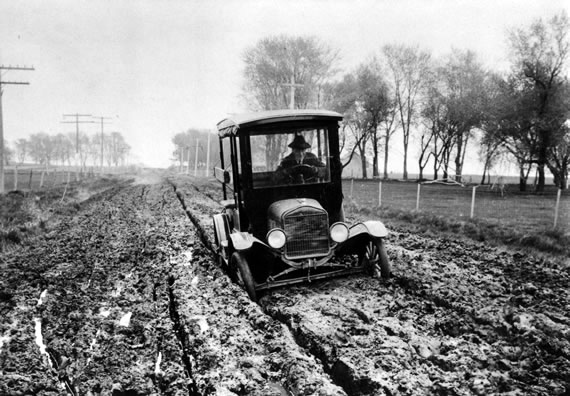
Developing a chunk does not by itself give you flexibility in applying that chunk. Interleaving is a way of fixing that.
Interleaving is when you try and generalise your understanding of a chunk by varying the context or altering the parameters of the problem. For example, doing a harder set of examples of the problem. This helps to improve flexibility.
Book: The Structure of a Scientific Revolution New people, either young or from different fields, are normally responsible for the greatest shifts in a field. This is because they transfer their chunks from other contexts.
Interleaving can counter einstellung by generating novel approaches in your problem solving. This is because it can help you to find new ways to apply chunked information to the problem at hand. You can practice Interleaving by working with different chunks, approaches and techniques all in one session.
Recall is an effective way of testing your knowledge and understanding of something. Recall can work as a way of building strong neural hooks for your knowledge.
Chunks are best built with:
-
understanding.
-
Focused attention.
-
Practice.
Mini testing is an effective way to dispel Illusions of competence.
Making mistakes is something to be welcomed when you learn.
Deliberately practice the difficult stuff. Otherwise you might fall into an illusion of competence.
Use the 30 second review. This technique is a great way to cement the valuable information in your day to day life. It can be practiced by taking 30 seconds after a learning session or important experience and trying to gather up the most important things that came up. Ideally you write these down.
Chunking requires focused attention and understanding. To build expertise you need flexibility to apply your chunks in an unusual way.
Learning in a group
Working alone is deadly. You need to do your learning as a member of some kind of community.
Engineering is a team sport. Your team members also need to be serious about studying and learning.
Build a community. Give support to your community members.
When you take breaks from your learning, make sure you actually relax your brain. Don't do stressful activities in your breaks.
Use as many modes of input as possible in your learning. Use sounds, visuals, vivid concepts, gamify it, explain it to others. When you convert a concept into a different form, you build new connections in your brain that help make it sick.
Ultralearning. Tips on becoming an expert
Scott Young took on and completed the learning challenge of learning the 4 year undergrad computer science course at MIT in 1 year of independent learning.
Always do a problem yourself before looking at the solution. Only look at the solution if you've really done your best already.
When reviewing a problem, write down how you solved it. See where the fuzzy areas are in your recall. Those are your weak spots.
Try to turn your learning into specific projects. For example: learning everything about this subject in 1 month. Make it time bound.
When you don't study with intensity you end up taking longer to learn a subject. Your learning sessions should be like short, intense sprints.
To remember something, ask "When and how will I use this?"
Apply directness. When you want to learn something, approach it as directly as possible. If you want to get better at coding, code more. If you want to get conversational with a new language, then find a native speaker and only speak the new language.
Read Ultralearning to learn more.
Procrastination and memory
Good learning is a piece by piece activity. It should span a decent period of time.
Using willpower is expensive. You shouldn't have to use it to fight procrastination. Find ways to dodge the moments of procrastination or to remove the temptation completely.
The discomfort or pain of starting something new, normally only lasts 8 seconds or so.
We procrastinate to relieve pain or discomfort from doing certain activities. Boredom is uncomfortable, and if you observe carefully you can feel the uncomfortable sensations in your body when working.
Your habits consist of 4 parts:
-
The cue, which is whatever triggers the habit.
-
The routine. This is the zombie mode where your brain falls into a state of lower energy usage and follows a familiar pattern.
-
The reward. This is a certain sensation you get to indicate the end of the habit cycle.For example: the feeling of clean teeth after brushing.
-
The underlying belief. This is the belief that drives the habit.
To avoid procrastination
Avoid focusing on product or outcomes. Instead, focus on the process to get to the outcome. For example, instead of focusing on finishing an essay, focus on doing a 30 minute pomodoro session on the essay.
Cultivate that process as a habit. Make that process into the lever that you pull when you want to get something done.
When you find yourself procrastinating, simply carefully observe the sensations in your body. Often the procrastinating activity will involve something that creates pleasant sensations. Observe them.
Harnessing your zombies
Analyse your habits based on their 4 parts.
Part 1: The cue
Each of these can be a potential cue for habit execution.
-
Location -> At your desk.
-
Time -> First thing in the morning.
-
Feeling -> Tired, angry, or stressed.
-
Reaction to stimulus -> Seeing a certain image, song or person.
All of these stimulate certain sensations on the body. These sensations are what lead to a reaction, which is the beginning of the routine part of the habit.
The routine
The routine is where stuff happens. Often this part of a habit can be changed, while keeping the other parts. For example some smokers quit by doing a run when they feel that urge to smoke.
Plan what you'll do instead to get the kind of results you want.
The reward
Reward yourself for the completion of a positive routine. This helps to cement the habit in place.
The belief
A great way to shift your underlying beliefs that keep you doing a certain habit can be hanging around people who have different beliefs.
We might be inspired because of the results they get, or we might want to fit in, or it might just provide good company. The result is that our beliefs shift, and so do our habits.
It's also easy to fall back into old habits during times of stress. During these times it is best to try and speak to people with the beliefs and habits we want, or change our context to make those undesirable habits more difficult to do.
Planning
Have a weekly list of key tasks to accomplish. These can be social, admin, personal or work related.
Prepare a list of tasks to get done each night for the next day. This helps your zombie mode get started on the tasks easily the next day.
Try to keep the daily task list short, only 4 to 6 items.
Plan the time at which you quit. Planning your quitting time is at least as important as planning your working time.
Plan when you'll take breaks, and be sure to include some movement/exercise.
Put the hardest stuff at the beginning of your day. (Eat your frogs).
Keep a learning journal to see what does and doesn't work. Use this to analyse your habits to see how to change them.
Delay rewards until your work is complete.
Trust your learning plan.
Eat your frogs first.
Memory and mind palaces
Our visual and spatial abilities are highly developed compared to our brain's other abilities.
We can take advantage of this when we remember stuff by tying it up with visual and spatial features. This is the power of the mind palace.
To remember something:
-
It must be memorable.
-
It must be repeated (Anki is a great tool for this)
-
You have to pay attention.
The process of remembering stuff can be thought of as a cycle between our active working memories and our inactive long term memories.
Every time we re-activate some information and move it to our working memory we re-consolidate that information, and make it easier to access from our long term memory.
Astrocytes are a key component in brain function and learning. Here are some of their features:
-
They provide nutrients to neurons.
-
They play a role in the repair of neurons.
-
Einstein had significantly more of these in his brain than normal.
Meaningful groups
Create meaningful groups of information to help you remember them.
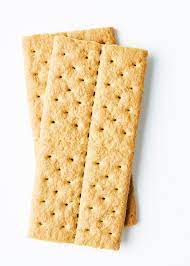
Vampires are repelled by Garlic, Rosemary, Hawthorne, and Mustard. GRHM -> Graham cracker.
Medical students use the sentence "Some lovers try positions they can't handle" to remember the first letters of all the bones in the hand.
Try to use this technique yourself to create novel groups.
A memory palace is an effective way to remember sequences of information.
The memory palace involves breaking a location you know well into pieces and then associating each item on the list with each piece of the location in a vivid way.
Remembering things in this way helps you to achieve mastery in them faster. It also helps you to become more creative, as these require creative images of the information to make it more vivid and memorable.
Using these techniques does get easier over time.
You will also be able to use and apply the concepts you've learned more easily when you can remember them easily.
Relate ideas to things that interest you. For example, when trying to remember a specific number, think of a number in a field you like already. For example 1105 might be a significant date you need to remember in history, and for a runner this might be a good time in which to run 2km(11:05), so they can link these things together to remember the date.
By learning things quickly and well with tools like memory palaces, you can quickly achieve mastery.
Tips for remembering deeply
When trying to remember a new person, take time to find something interesting about them and create that into a vivid image of them to remember them with.
Try to test your recall frequently.
How to remember complex concepts:
- Go through a body of text or other learning material.
- Identify key words or phrases.
- Turn those into images.
- Put them into a memory palace.
How to keep your memory sharp:
- Challenge yourself to remember things.
- Be social.
- Have fish oil. Ideally from a cold chain source.
- Be physically active.
- Be joyful.
Becoming an expert at solving problems
Study every subject every day. If you spend just 15 minutes reviewing your knowledge of all of the important subjects, you'll have a wonderful ability to work with them in your daily life.
It's like playing an instrument. When you're in practice you can easily pick it up and play. When you let the practice decay for a long term it's much harder to play well coming back to it.
You can hard-wire your brain to solve problems by working with novel problems every day. He did this by working through every exercise in the textbook relentlessly.
Taking breaks at both the macro and micro levels is critical. But you also need to be working hard.
Choose a career where you enjoy solving those kinds of problems.
Sometimes you don't love the subject immediately. In some subjects, that love will take some time.
When you're still getting started work with examples that make it easy for you to get started. Don't get stuck trying to solve hard stuff at first.
How to solve deep problems
His advice for when you first look at a math problem:
-
Don't panic.
-
figure out
-
What are you trying to achieve?
-
What are you trying to do here? Perhaps imagine the problem visually.
-
What information do you have available?
Often the traditional school systems encourage speed in maths. You don't need to go fast.
Perhaps you can draw a diagram of the problem.
Can you apply a known solution to solve this problem?
Can you adapt a strategy to solve this problem?
Can you figure out a novel strategy? (This is the fun one)
If you've been struggling for a while, take a break.
You need to have tried every approach you can think of.
Think slowly. Slow down your problem solving. Don't rush.
When dealing with a massive problem for a long time Keith starts to think of the problem like a member of his family. Often thinking back to it and wondering if something he's learned might affect it or provide a solution.
You are busy growing the neural structures to think about this problem as you grapple with it.
Doing physical activity like climbing, cycling, running etc can help stimulate your thinking.
Multitasking isn't possible.
Work flat out and with intense focus during your study sessions.
You don't need willpower all the time, just when you start doing something.
Whenever you switch tasks or projects, procrastination can be an issue.
Remove all alerts and distractions from your workspace.
Exercise and your brain
Exercise is the best gift you can give your brain. It assists in the generation of new neurons in your pre-frontal cortex.
There are critical learning periods in your life when certain abilities can be rapidly developed, such as first language acquisition up until the age of puberty. After these periods, it is still possible to develop those abilities through deliberate practice, but it it takes much longer.
Your pre-frontal cortex is used in language learning and long term planning.
Good judgement take a long time and a lot of experience to develop.
Renaissance learning
Learn using metaphor and analogy.
At times we experience something called knowledge collapse. This is when something we've learned well begins to feel extremely difficult and the stuff that we are familiar with no longer seems to fit together right.
These periods are normally temporary, as your brain is finding new ways to put your knowledge together. Often once they pass we experience great leaps forward in our expertise within that subject.
Metaphor and analogy
Metaphors can greatly improve our understanding of material.
One useful technique is to imagine yourself as the problem you are trying to solve. For example, imagine you are trying to solve displacement of water and how it keeps a boat afloat. Imagine you are the boat in the water and you have all the pressure of the water below you trying to equalise itself.
Metaphors can be useful to jolt us out of einstellung. The familiar pattern can be broken by the new mental image.
Often by following or extending a metaphor we can unlock surprisingly accurate findings about a subject. But be careful in doing this because this is not always the case.
Metaphor can also help us with memory. For example we can remember that cations are "paws"itive while anions are negative because they sound like "onions", which make us cry.
Chunking and Genius envy
When you have practiced something a lot, you start to learn why you do something, rather than how.
Because you're no longer focused on implementation you can now think about strategy instead. Which of the many techniques you have at your disposal will you apply now? This is the kind of question an expert will have to answer. Consider how a chess grandmaster feels when considering their next move.
Being very intelligent means you have fast recall and potentially more slots in your working memory. However, it can also lead to einstellung and a difficulty with lateral thinking.
Often daydreamers with average working memory can have wonderful insights by making distant connections in their brain.
By using deliberate practice you can develop very deeply established chunks that can allow you to operate with similar results as the deeply gifted.
Change your thoughts. Change your life.
Santiago Cajol. Started off his life as a delinquint and a menace to society.
He would eventually go on to become known as the father of the field of neuroscience.
By exposing himself repeatedly to difficult mental concepts and by engrossing himself in mentally challenging work he shifted the behavioural patterns that were established in his brain until he could perform deep research.
The myelin sheaths in the brains of some people only develop in their 20s, and might explain why some juvelines act with such poor control. It is possible that the part of their brain associated with control is not yet fully connected with the part associated with attention.
Santiago Cajol's self professed saving attribute was his perserverance. He called this the "virtue of the less gifted".
When you take responsibility for your own learning and start following your own curiousity you begin to create a 3D picture of the world and start being able to create interesting insights.
Whether you do well or poorly, people will criticise you. So you may as well do what you feel is best.
Take pride in your differences in who you are because these things are what will set you apart.
Charles Darwin was a washout in college but he toured the world as a ship's naturalist and eventually returned with a deep and unique perspective which led to him developing his On the Origin of Species.
Often on your learning journey you need to take a cool dispassionate view towards the thoughts of others. Being overly empathic can leave you too vulnerable to those who may not have your best interests at heart.
The value of teamwork
There is a brain disorder which affects the right hemisphere of the brain. It leeds to an inability to apply a big picture perspective to what you're thinking about.
It can lead to great errors in calculation when we forget about the big picture and focus only on our solution in a small context. When we fail to double check ourselves with this perspective, for example on a test, we are failing to use our entire brain while solving the problem.
The left hemisphere of the brain is involved with focused calculations, and overall seeks to maintain the status quo once it reaches a solution. It would rather we accept a solution as it is rather than recalculate it. This means it is easy to skip over clear errors when we only engage the focused mode.
When we learn with friends, that network of friends acts as an extended diffuse mode. They help to check you aren't getting stuck in the wrong way of solving things, and can provide an expanded perspective. They can point out things like job opportunities you might have missed, new ideas, and errors in thinking.
When you have a learning group, make sure they are serious, focused and prepared.
A test checklist
You will learn more by doing a 1 hour test than if you spent that same time studying.
With that in mind here is a checklist of things you should be able to say "yes" to before doing a test:
- Did you make a serious effort to understand the material?
- Did you work with classmates on homework problems?
- Did you attempt to outline a solution for all the problems before working with your classmates?
- Did you actively participate in homework discussions?
- Did you consult with the instructors when you were struggling with something?
- Did you understand all the solutions to the homework problems?
- Did you ask in class for explanations of solutions that weren't clear to you?
- Did you have a study guide which you can say you followed closely?
- Did you attempt to outline a lot of problem solutions quickly without immediately jumping into the calculations for each one?
- Did you go over the study guide with other classmates and quiz one another?
- If there was a review session, did you go to it?
- If you answer no to the following question it invalidates the rest: did you get enough sleep on the night before the test?
Hard start - jump to easy technique
Difficult problems often require some time with the diffuse mode to be solved.
Start by looking through the hard problem. Whenm you feel like you are being unsettled by the problem, move to an easier problem. Solve it, then jump to a different hard problem. Then once you feel unsettled by that one jump to an easy problem again. After some time, go back to the original hard problem and see if the solution comes more easily this time.
This works by allowing background parts of your brain to get to work on the problem while your main attention is focused elsewhere. Essentially parallelising your problem solving.
Final tips:
Perform a deep breathing exercise where you can feel your stomach rising rather than your chest. Do this for about 90 seconds.
Cover up the answers to your multiple choice question. Try to recall the right answer by yourself.
Try to have a second career option or life plan available to you in case this one doesn't work out. By doing this you reduce your anxiety going into the test and increase your likelihood of success.
Keep in mind the distinction between good worry and bad worry. There is a difference.
When you're preparing the day before a test, lower the intensity of your studying. You wouldn't do a 20k run the day before a marathon.
Double check your answers with a big picture perspective. Ask yourself if the solution makes sense when placed in the big picture.
When reviewing your answers to a test after finishing, look from back to front to create a fresh take.
When you feel anxious before a test, try to turn that anxiety into a feeling of excitement instead.
Remember to blink as a way of resetting your attention. Between each question take a blink to refocus.